1. What Is Heat-Treated Steel Strip?
Heat-treated steel strip is a specialized form of High Strength Steel Strip that has undergone controlled heating and cooling cycles to alter its physical and mechanical properties. Unlike standard steel, which is often defined solely by its chemical composition, heat-treated strip is defined by its microstructure.
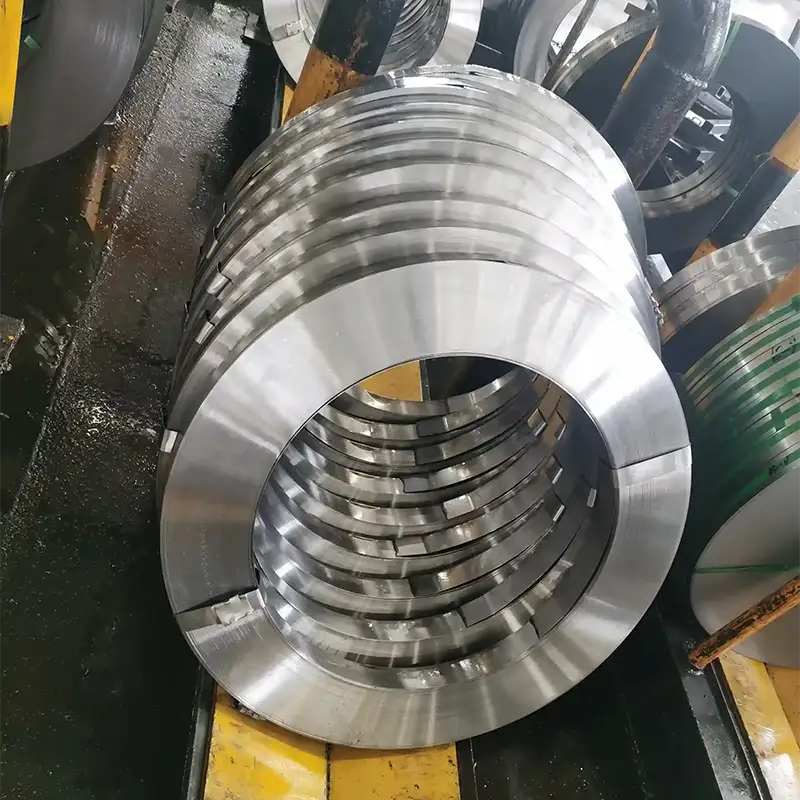
The process typically begins with cold-rolled steel coils, which are then subjected to processes such as annealing (softening), quenching (hardening), and tempering (toughening). This results in a Hardened Steel Strip that offers a unique combination of high yield strength, wear resistance, and fatigue resistance.
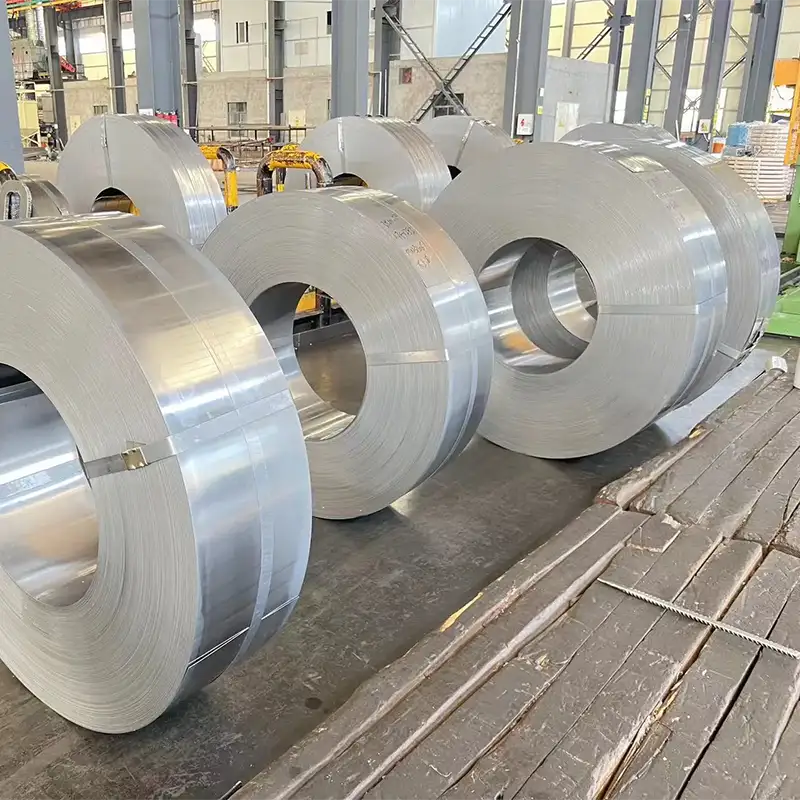
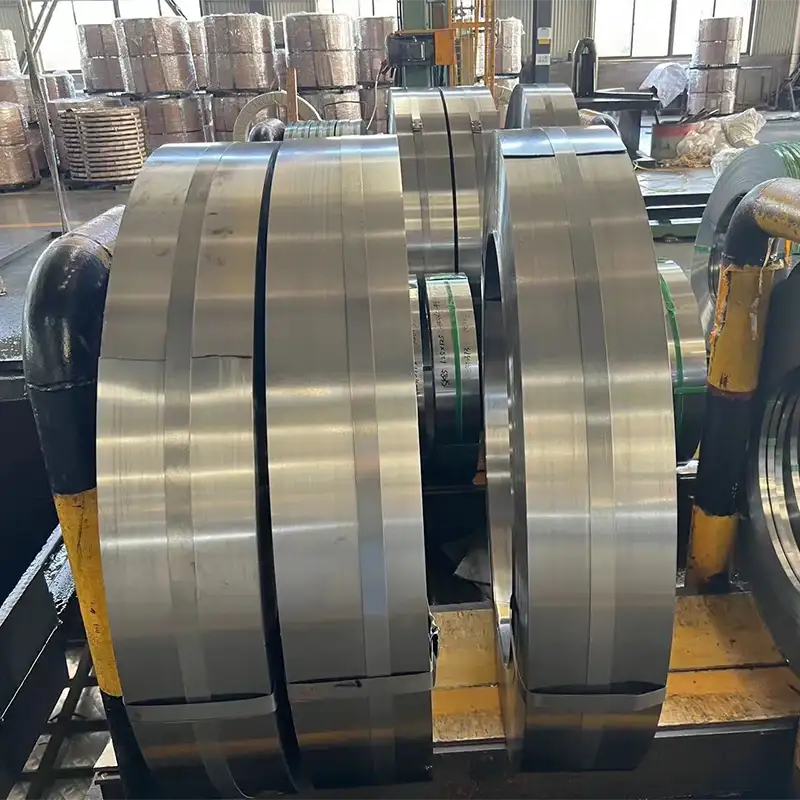
We provide Heat Treated Steel Coil solutions that are tailored to specific hardness ranges, ensuring that the material meets the rigorous demands of the end application.
2. Why Heat Treatment Matters
Heat treatment is the critical step that unlocks the potential of steel alloys. Without it, high-carbon steel is often too brittle or too soft to be useful in demanding environments.
- Wear Resistance: For applications like mining screens or agricultural blades, the surface must resist abrasion. Heat treatment increases surface hardness, significantly extending the service life of the part.
- Structural Integrity: Heat treatment relieves internal stresses caused by cold rolling, preventing warping or cracking during subsequent fabrication processes like slitting or punching.
- Fatigue Strength: Components subject to cyclic loading (vibration, repeated impact) require high fatigue strength, which is achieved through proper hardening and tempering cycles.
3. Hardness vs. Strength vs. Toughness
One of the most common misconceptions in material selection is equating hardness directly with strength. While related, they are distinct properties.
- Hardness: The resistance to surface indentation or scratching. This is crucial for wear resistance.
- Strength: The ability to withstand an applied load without permanent deformation.
- Toughness: The ability to absorb energy and plastically deform without fracturing.
The goal of our heat treatment processes is to find the “sweet spot” for your application. For example, a Mining Steel Strip screen might require extreme hardness to resist rock abrasion, but it still needs enough toughness to withstand the impact of falling material without shattering. Our expertise lies in balancing these properties through precise temperature control and chemistry adjustment.
4. Quenching and Tempering
We utilize advanced quenching and tempering lines to produce Hardened Steel Strip with consistent properties.
- Quenching: The steel is heated to a high temperature (austenitizing) and rapidly cooled (usually in oil or water). This transforms the microstructure into martensite, which is extremely hard but also very brittle.
- Tempering: The quenched steel is reheated to a lower temperature. This process reduces brittleness and relieves internal stresses, adjusting the hardness and toughness to the desired specification.
By controlling the tempering temperature, we can achieve specific mechanical properties. This is why Heat Treated Steel Strip is superior for high-stress applications compared to non-tempered alternatives.
5. Why Flatness and Dimensional Accuracy Matter
Heat treatment can be a violent process for steel. The rapid heating and cooling cycles can induce distortion, warping, and changes in dimensional tolerance.
For manufacturers using automated stamping or laser cutting lines, poor flatness is a nightmare. It causes jams, misalignment, and inconsistent part quality.
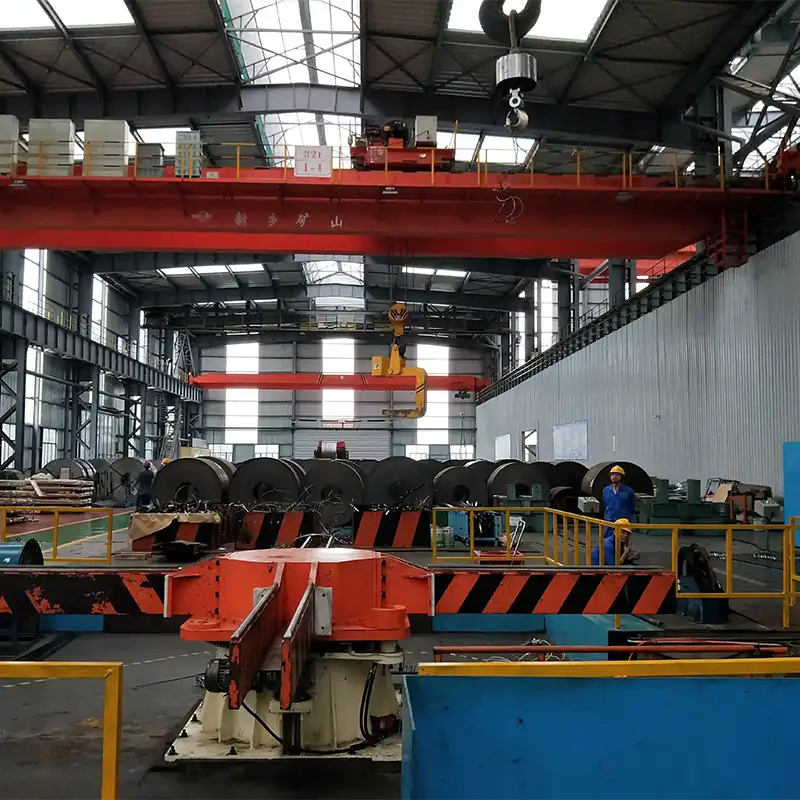
Our production lines are equipped to handle the challenges of heat treatment while maintaining:
- Exceptional Flatness: Critical for automated processing.
- Dimensional Accuracy: Ensuring the strip thickness and width meet tight tolerances.
- Uniform Surface Quality: Free from decarburization or scale, ensuring a clean finish for downstream processing.
We possess in-house slitting capabilities, meaning we can deliver Heat Treated Steel Coil cut to your exact width requirements, minimizing waste and handling for your team.
6. Batch-to-Batch Consistency
In mass production, consistency is king. If one batch of steel is harder than the next, your tooling wear rates change, and your product quality fluctuates.
We understand that a technical supplier must guarantee reproducibility. Our quality control systems monitor hardness, tensile strength, and microstructure throughout the process. Whether you are ordering a trial coil or a full production run, you receive High Strength Steel Strip that behaves exactly as expected, every time.
7. Applications in Mining Equipment
The mining industry is one of the most demanding sectors for steel strip. Equipment must withstand constant abrasion, high impact, and corrosive environments.
Our Heat Treated Steel Strip is widely used in:
- Vibrating Screens: High hardness for wear resistance.
- Crusher Components: High toughness for impact resistance.
- Conveyor Systems: Wear plates and scraper blades.
- Drill Rig Components: Structural parts requiring high yield strength.
By selecting the correct heat treatment specification, mining operators can significantly reduce downtime and maintenance costs associated with part replacement.