1. Why Band Saw Blade Selection Matters
Mining equipment operates in the harshest environments. The components used to build this equipment are often made from difficult-to-machine alloys, including high-nickel steels, hardened alloys, and thick-section materials.
Selecting a generic blade for these tasks often results in:
- Work hardening: The blade rubs instead of cuts, hardening the material surface.
- Tooth stripping: Improper pitch causes teeth to catch and rip off.
- Fatigue failure: Incorrect tension or blade width leads to cracks.
A properly selected Industrial Band Saw Blade ensures straight cuts, extends tool life, and minimizes machine downtime.
2. What Material Are You Cutting?
The first step in selection is identifying the workpiece material. Mining equipment manufacturing and repair involve various metals:
- Structural Steel: Used for chassis and frames. Generally easy to cut.
- Heavy Plate: Used for wear liners and structural supports. Requires a robust blade with a positive rake angle.
- High-Strength Alloys: Used in drive shafts and gears.
- Round Bar: Used for bolts, pins, and shafts. Requires variable pitch to avoid vibration.
Understanding the material’s hardness (Rockwell/HB) and machinability rating is crucial. For high-hardness materials, you must step up to a premium M51 Band Saw Blade.
3. M2 vs. M42 vs. M51: Which Is Right for You?
We offer three grades of bi-metal blades, each suited to different levels of production intensity.
| Feature | M2 (General Purpose) | M42 (High Performance) | M51 (Premium Heavy-Duty) |
|---|---|---|---|
| Hardness | Standard | High (8% Cobalt) | Ultra-High (10% Cobalt) |
| Best For | Low-alloy steels, mild steel | Stainless steel, tool steel, structural steel | Nickel alloys, titanium, hardened mining components |
| Wear Resistance | Good | Excellent | Superior |
| Heat Resistance | Moderate | High | Very High |
| Cost-Efficiency | Best for short runs | Best balance of cost/life | Best for exotic alloys & heavy solids |
Recommendation:
- Use M2 for general fabrication of mild steel frames.
- Use M42 for cutting structural steel and general mining equipment parts.
- Use M51 for cutting hardened wear parts, large cross-sections, and high-nickel alloys where blade life is paramount.
[Link to P05 Heavy-Duty Band Saw Blades]
4. How to Choose Tooth Pitch
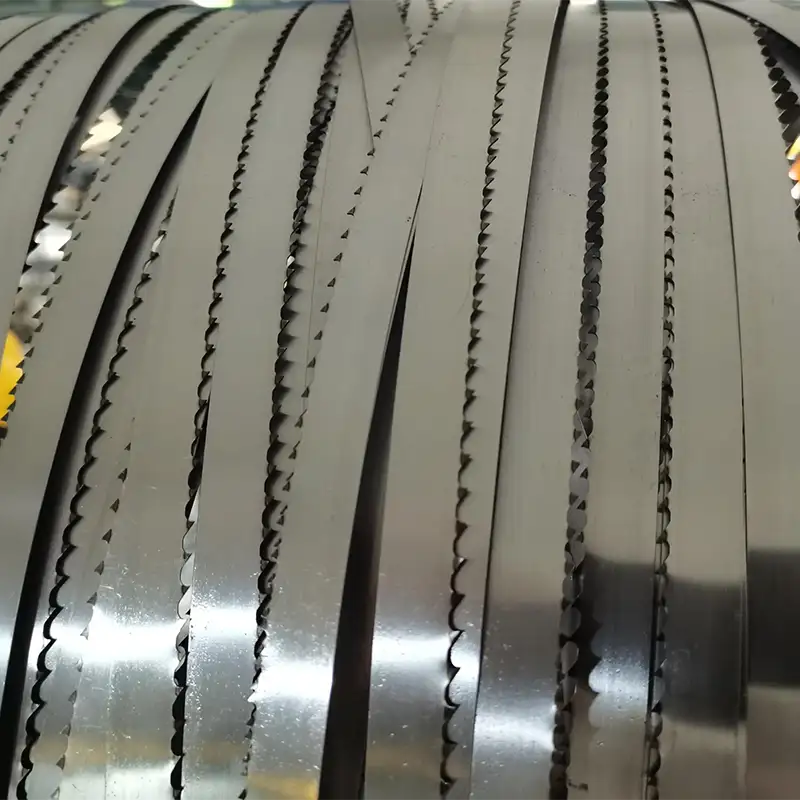
Tooth pitch (TPI – Teeth Per Inch) determines how the blade bites into the material.
- Coarse Pitch (2/3, 3/4 TPI): Best for thick materials (Heavy Plate, Large Round Bar). Provides deep gullets for chip clearance.
- Medium Pitch (4/6, 5/8 TPI): The “sweet spot” for general purpose cutting and structural steel.
- Fine Pitch (8/10, 10/14 TPI): Best for thin-walled pipe and small cross-sections.
The Golden Rule:
You must have at least 3 teeth in the cut at all times. If you are cutting a thin-walled pipe, use a fine pitch. If you are cutting a 500mm solid shaft, use a coarse pitch.
For mining equipment, Variable Pitch blades are highly recommended. They reduce noise, vibration, and prevent harmonics that can damage the machine.
5. Blade Width and Thickness
- Width: Determines the beam strength. For straight cuts in large mining parts, a wider blade (e.g., 41mm or 54mm) is required to resist deflection.
- Thickness: Determines fatigue resistance. Thicker blades (1.3mm or 1.6mm) handle higher feed rates but require more machine power.
Always consult your machine manual for the maximum blade width and thickness your saw can handle.
6. Thick vs. Thin Workpieces
| Workpiece Type | Challenge | Solution |
|---|---|---|
| Thick (Solid) | Chip evacuation, heat buildup | Coarse pitch, positive rake angle, flood coolant. |
| Thin (Tube/Pipe) | Tooth stripping, work hardening | Fine pitch, light feed pressure, variable pitch. |
7. Coil vs. Welded Endless Blade
- Welded Endless Blade: Ready to use. Ideal for standard sizes and quick replacements.
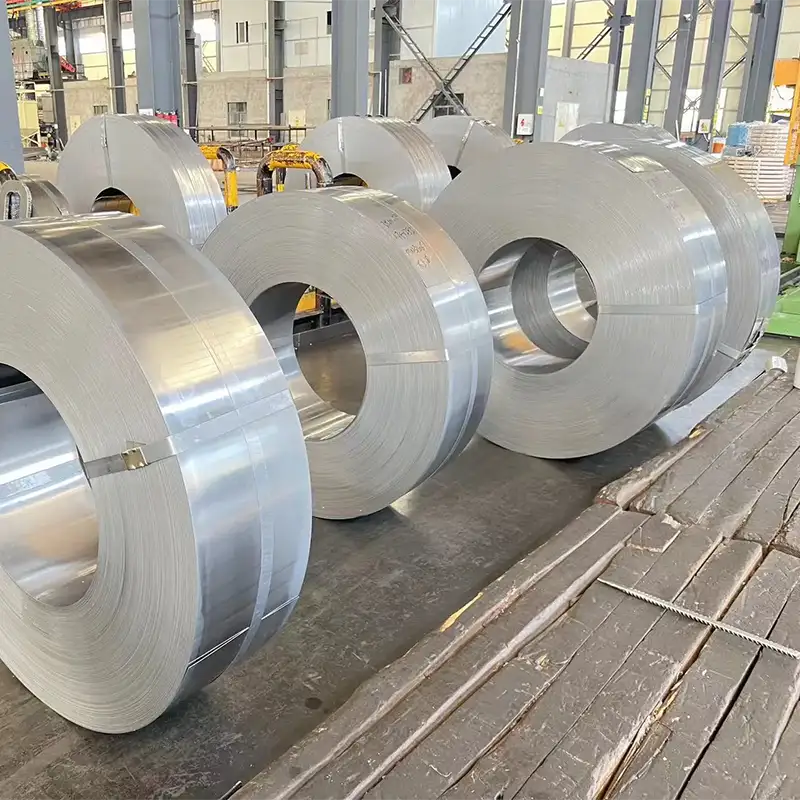
- Coil Blade: Cut to length and welded on-site. Ideal for maintaining inventory of various sizes without stocking hundreds of SKUs.
For mining operations, having a Coil Blade stock allows you to customize the length for different machines on-site.
8. Common Mistakes in Blade Selection
- Breaking-in Period: Not reducing feed rate for the first 50-100 cuts. This micro-chips the teeth to prevent premature wear.
- Wrong Coolant: Using the wrong concentration or type of coolant. Mining steels often require specific lubricity.
- Too Much Speed: Running the blade too fast for the material hardness.
- Ignoring Vibration: Not using variable pitch on structural sections.
Quick Reference Table
| Workpiece | Suggested Blade Consideration |
|---|---|
| Structural Steel | General Metal Cutting (M42, Variable Pitch) |
| Heavy Plate | Coarse Tooth Pitch (2/3 or 3/4 TPI) |
| Round Bar | Variable Tooth Pitch (4/6 TPI) |
| Pipe | Appropriate Tooth Engagement (Fine Pitch 8/10) |
| Mining Equipment Parts | Heavy-Duty Configuration (M51, Positive Rake) |