1. Mining Industry in Mongolia
Mongolia’s mineral resource endowment is among the richest in Northeast Asia. The country holds significant reserves of coal, copper, gold, iron ore, and fluorspar, and mining has long served as the backbone of the national economy. Large operating mines are in continuous equipment maintenance and replacement cycles, while new and expansion projects continue to enter construction.
The flagship example is the Oyu Tolgoi copper-gold project in the South Gobi region, operated under Rio Tinto’s leadership. Oyu Tolgoi holds a total resource of over 46 million tonnes of copper and 2,600 tonnes of gold, making it one of the world’s largest copper deposits.With plans for average annual copper extraction of 500,000 tonnes from open-pit and underground operations over the next four years.
This scale of operation translates directly into demand for mining machinery, mineral processing equipment, and wear-resistant spare parts. Ulaanbaatar, as the capital, concentrates mining authorities, major mining group headquarters, mine owners, EPC contractors, and equipment import traders—making it the primary entry point for the Mongolian mining market.
Related page: Mongolia Mining
2. Mining Equipment Requirements in Mongolia
Coal Operations
Mongolian coal mines, particularly open-pit operations, face severe abrasive wear conditions. Chutes, hoppers, and transfer points handle high-volume coal with significant sliding abrasion. Wear liners, chute plates, and conveyor skirt liners are high-consumption items. The harsh continental climate—with winter temperatures dropping well below −30°C—adds a low-temperature toughness requirement that standard wear steels often cannot meet.
Copper and Gold Operations
Copper and gold processing circuits in Mongolia, including the Oyu Tolgoi concentrator, require wear components for crushing, grinding, and classification equipment. Recent supply agreements illustrate the demand profile: wear parts for trommel screens, screen decks, steel-rubber composite pipes, and cyclone components are procured under multi-year framework contracts.
Maintenance-Driven Demand
A defining characteristic of the Mongolian market is the high frequency of equipment maintenance. Industry sources note that mine conditions in Mongolia are tough, and repairs are often in high demand as a result-. Equipment suppliers with in-country service capabilities emphasize parts support, field service, and remanufacturing programs to maximize uptime-. Mining Steel Strip products that can be cut, formed, and welded on-site—or supplied as ready-to-install wear components—align directly with this maintenance-centric operating model.
3. Mining Industry in Uzbekistan
Uzbekistan is in the midst of an ambitious mining sector expansion. The government’s Uzbekistan 2030 strategy sets targets to increase annual production to 175 tonnes of gold, 500 tonnes of silver, 15,000 tonnes of uranium, and 500,000 tonnes of copper. To achieve these goals, the country is implementing investment projects totaling approximately $22 billion, expected to create around 40,000 high-paying jobs.
The centerpiece of this expansion is the Almalyk Mining and Metallurgical Complex (AGMK), Uzbekistan’s largest state-owned mining enterprise. AGMK accounts for 7% of national industrial output and 15% of export revenue, and is the country’s only cathode copper producer. The company operates three open-pit mines, four underground mines, six concentrators, a zinc plant, and a copper smelter, supported by central repair and mechanical facilities.
In March 2026, AGMK commissioned its No. 3 copper concentrator—a $2.7 billion project. The plant incorporates advanced equipment from global suppliers including FLSmidth, Weir Minerals, Siemens, and Metso, with flotation cells and grinding systems supplied by Metso-. Upon full ramp-up, cathode copper output is expected to rise from 148,500 tonnes to 300,000 tonnes annually, with gold output increasing from 20 to 33 tonnes. Design work on a No. 4 concentrator is already accelerating, targeting a further 50% increase in those metrics.
Related page: Uzbekistan Mining
4. Equipment and Mineral Processing Requirements in Uzbekistan
Uzbekistan’s mining modernization program differs from Mongolia’s maintenance-driven profile. The emphasis here is on new processing capacity and equipment modernization, creating demand for higher-capacity excavators, wheel loaders, dump trucks, and upgraded crushing and grinding circuits.
Gold and Copper Processing
Gold and copper concentrators require wear-resistant components throughout the comminution circuit—crusher liners, mill liners, chute liners, and screen decks. The AGMK No. 3 concentrator’s digitalized, AI-managed production line introduces additional requirements for precisely fabricated replacement parts that maintain dimensional accuracy across automated maintenance workflows.
Uranium and Chemical Processing
Uzbekistan is a significant uranium producer, and uranium processing involves acidic slurries and elevated temperatures. Standard wear steels degrade rapidly under these conditions. Corrosion-enhanced wear is a specific challenge: acidic slurry chemically attacks the steel surface, compromising structural integrity and accelerating material loss. Steel grades with enhanced corrosion resistance and elevated-temperature stability are required for these applications.
Modernization-Driven Procurement
Unlike Mongolia’s decentralized maintenance procurement, Uzbekistan’s modernization is largely state-directed through AGMK and Navoi Mining and Metallurgical Combine (NMMC). These entities procure through structured project channels, with opportunities for international suppliers to participate in equipment packages, spare parts programs, and technical service contracts.
5. Wear-Resistant Steel Strip Applications
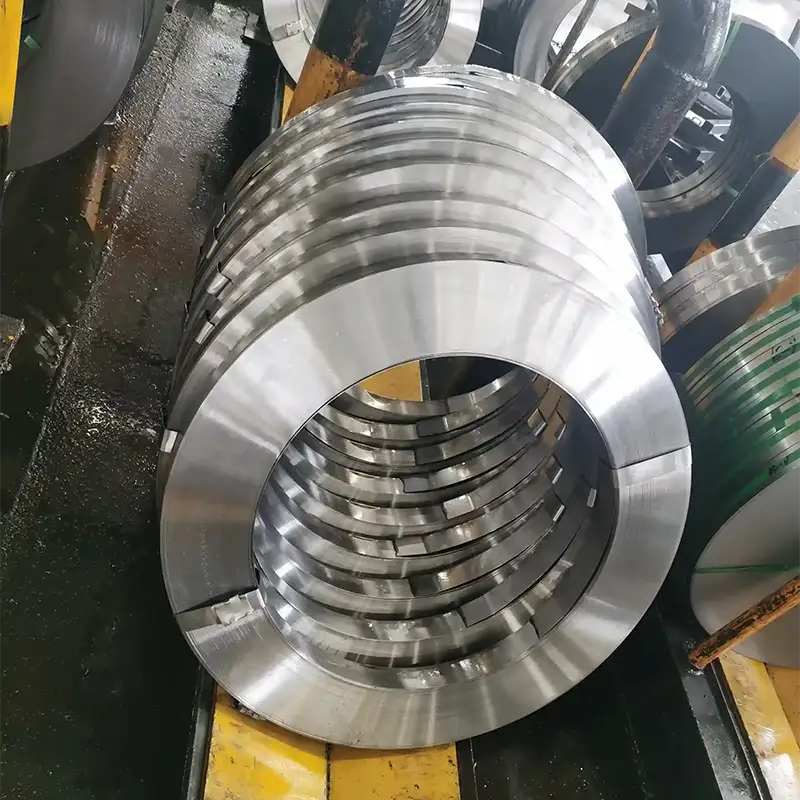
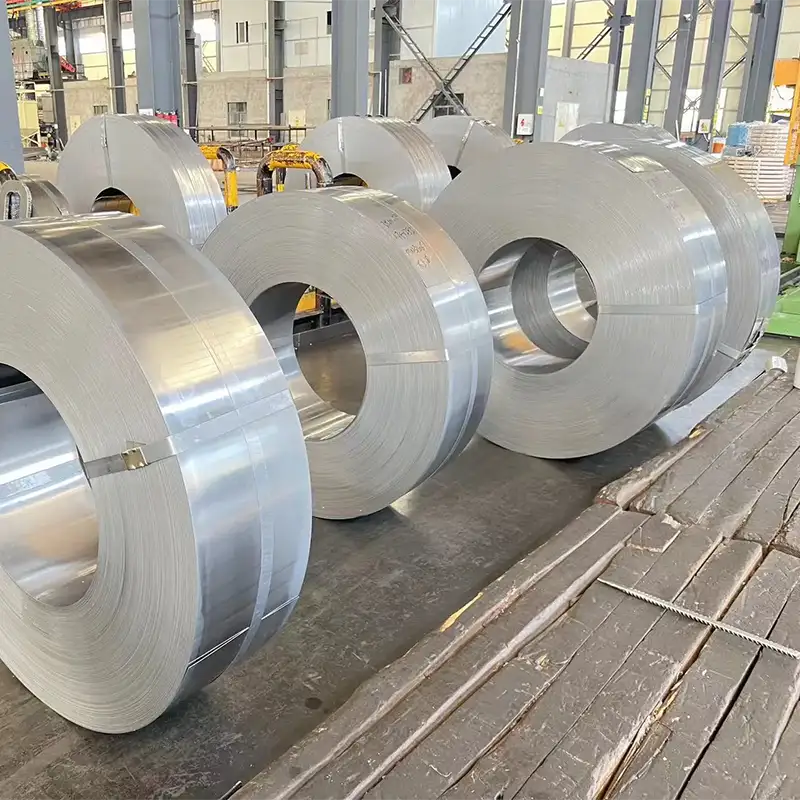
Wear-resistant steel strip is a core material for mining equipment maintenance and fabrication. Its applications span the full material handling chain:
- Chute and transfer point liners – High-sliding abrasion resistance for coal, ore, and concentrate handling. Wear strips for continuous mining equipment and coal hopper docks are established applications-.
- Crusher and mill components – Wear liners, grate bars, and feed chute liners in crushing and grinding circuits.
- Bucket and blade protection – Cutting edges, wear strips, and heel plates for excavator buckets, loader buckets, and dragline buckets-.
- Screen and trommel components – Screen decks, trommel screen panels, and grizzly bars.
- Dump truck and haulage protection – Bed liners, tailgate liners, and wear strips for continuous mining equipment.
For Mongolia’s coal and copper operations, abrasion resistance under low-temperature conditions is critical. For Uzbekistan’s processing plants, wear steel must also withstand acidic slurry exposure and elevated temperatures. Steel grades with 400–500 HBW hardness and appropriate toughness balances serve the majority of these applications, with specialty grades available for corrosion-accelerated wear environments.
6. Heat-Treated Steel Strip Applications
Heat-treated steel strip—produced through quenching and tempering or controlled rolling processes—offers a combination of high strength, hardness, and toughness that is essential for dynamic mining equipment components.
Mining Machinery Components
Heat-treated steel strip is used in:
- Conveyor components – Wear strips, skirtboard liners, and impact bars requiring high strength and formability.
- Crushing equipment – Jaw plates, cone liners, and impact bars where a balance of hardness and impact toughness is required.
- Drilling and excavation tools – Wear pads, structural reinforcement plates, and support components on drills and excavators-.
- Underground support systems – W-steel strips for roadway support in coal mines, where controlled heat treatment provides the required yield strength and impact toughness-.
Country-Specific Considerations
In Mongolia, heat-treated strip for underground coal support and equipment structural components benefits from grades optimized for low-temperature impact toughness. In Uzbekistan, heat-treated strip used in concentrator structural components and chute fabrication must maintain hardness stability across varying operating temperatures encountered in mineral processing circuits.
7. Metal Cutting Band Saw Applications
Metal cutting band saws and band saw blades are consumable tools and equipment that support mining maintenance and fabrication operations in both countries.
Maintenance Workshop Applications
Mining maintenance workshops use horizontal band saws for cutting steel bar stock, pipe, structural sections, and wear plate to size for fabrication and repair. The ability to cut ferrous and non-ferrous materials—including carbon steel, profile steel, H-beam, and copper—makes band saws essential in the mining workshop environment-.
Blade Selection for Mining Steels
Cutting wear-resistant and heat-treated steels requires appropriate blade selection. Bi-metal M42 band saw blades are commonly used for cutting heavy metals and hard steels in mining maintenance applications-. Blade pitch selection depends on material section thickness: coarse teeth for large-diameter stock, finer teeth for thinner sections and precision cuts-.
Uzbekistan Import Demand
Uzbekistan already imports metal band saw blades for industrial cutting operations, with documented trade flows of M42 band saw blades in sizes such as 4115×34×1 mm-. As Uzbekistan’s mining equipment modernization accelerates, demand for band saw equipment and blades for maintenance workshops at AGMK and NMMC facilities is expected to increase.
8. What Mining Equipment Buyers Should Consider
Mongolia buyers should prioritize:
- Low-temperature performance – Verify impact toughness values at service temperatures. Mongolia’s winter conditions demand steel that does not become brittle in the cold.
- On-site fabrication capability – Steel strip that can be cut, bent, and welded using workshop equipment available at mine sites reduces downtime and inventory requirements.
- Maintenance-cycle alignment – Wear component service life should align with planned maintenance shutdowns to maximize operational efficiency.
- Counterfeit risk – The Mongolian market has experienced counterfeit wear steel infiltration. Procuring through certified channels with traceable material certification is essential.
Uzbekistan buyers should prioritize:
- Corrosion-enhanced wear resistance – For uranium and copper processing environments with acidic slurries, specify steel grades with enhanced corrosion resistance.
- Elevated-temperature stability – Processing plant applications may involve temperatures up to 350–400°C in certain circuits. Verify hardness retention at operating temperature.
- Dimensional precision – Modernization projects with automated maintenance systems require replacement parts manufactured to tight tolerances.
- Project-level supply capability – State-directed modernization projects benefit from suppliers who can support equipment packages, spare parts programs, and technical documentation.
9. Customized Export Supply
We provide customized steel strip and cutting solutions for mining operations in Mongolia and Uzbekistan, including:
- Material grade selection – Wear-resistant, heat-treated, and corrosion-resistant steel strip in hardness ranges from 360 to 550 HBW, matched to specific application requirements.
- Cut-to-size and formed components – Wear liners, chute plates, screen panels, and structural components supplied to drawing or template.
- Band saw equipment and consumables – Horizontal band saw machines and M42 bi-metal blades sized for mining maintenance workshop requirements.
- Technical documentation – Material certifications, welding guidelines, and fabrication recommendations for on-site processing.
- Export logistics – Consolidated shipments to Ulaanbaatar and Tashkent, with documentation support for customs clearance in both markets.
For volume programs, we can arrange scheduled deliveries aligned with maintenance calendars and project timelines.
10. Conclusion
Mongolia and Uzbekistan are distinct mining markets with different demand drivers. Mongolia’s market is defined by large-scale copper and coal operations with continuous maintenance requirements, where wear protection and maintenance-ready steel components are critical. Uzbekistan’s market is defined by state-led modernization and new processing capacity, where heat-treated steel, corrosion-resistant materials, and precision-fabricated components support equipment upgrades across gold, copper, and uranium operations.
Our steel strip and cutting solutions address both market profiles. Whether you are maintaining equipment at a Mongolian copper mine or supporting a concentrator modernization project in Uzbekistan, we provide the material grades, fabrication services, and technical support required for mining equipment performance.
Talk to Our Mining Materials Team to discuss your specific application requirements.