1. What Is Wear-Resistant Steel Strip?
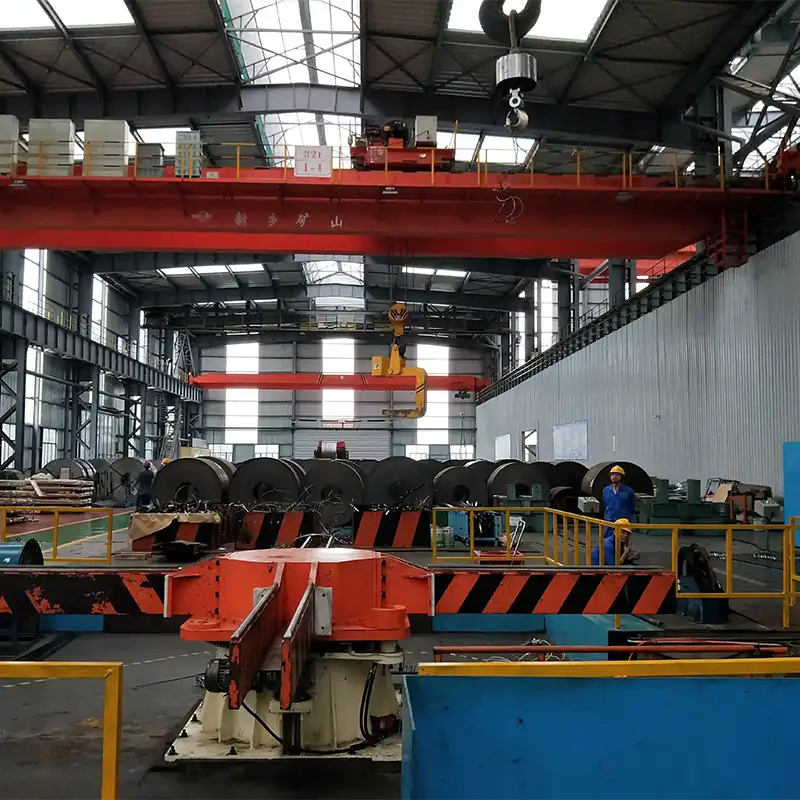
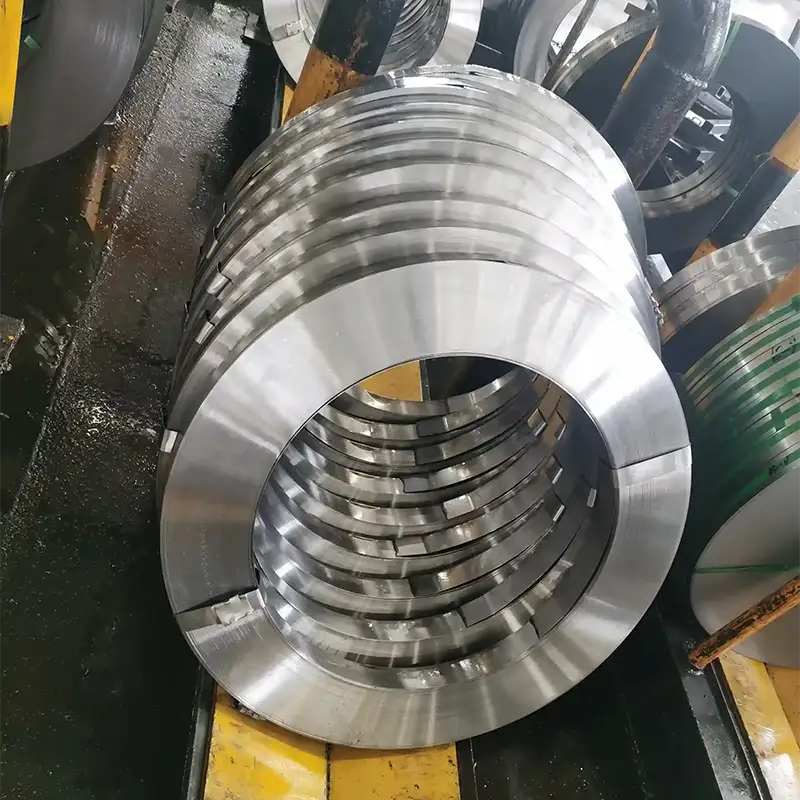
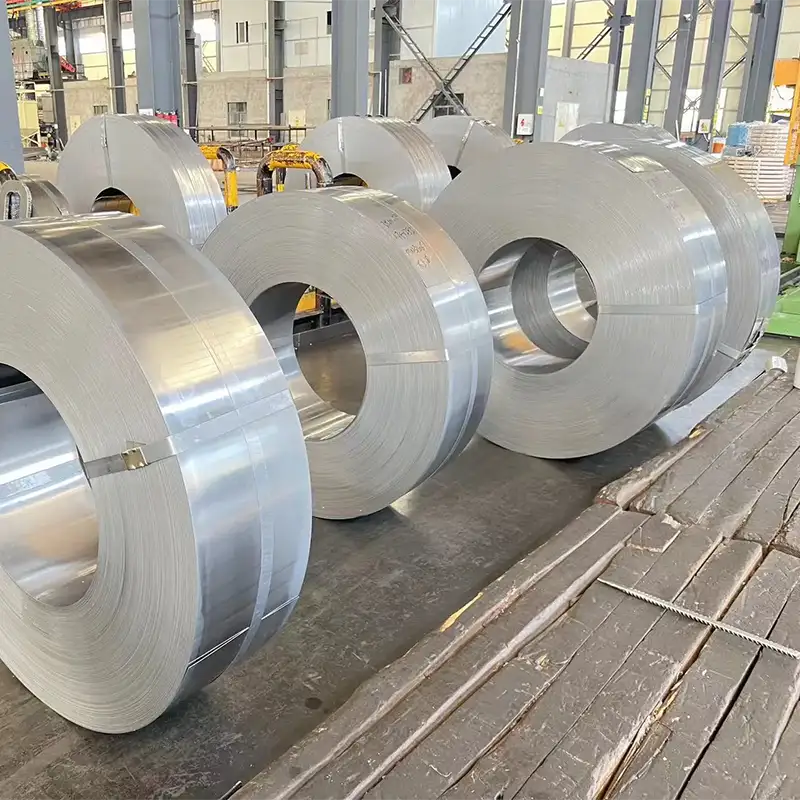
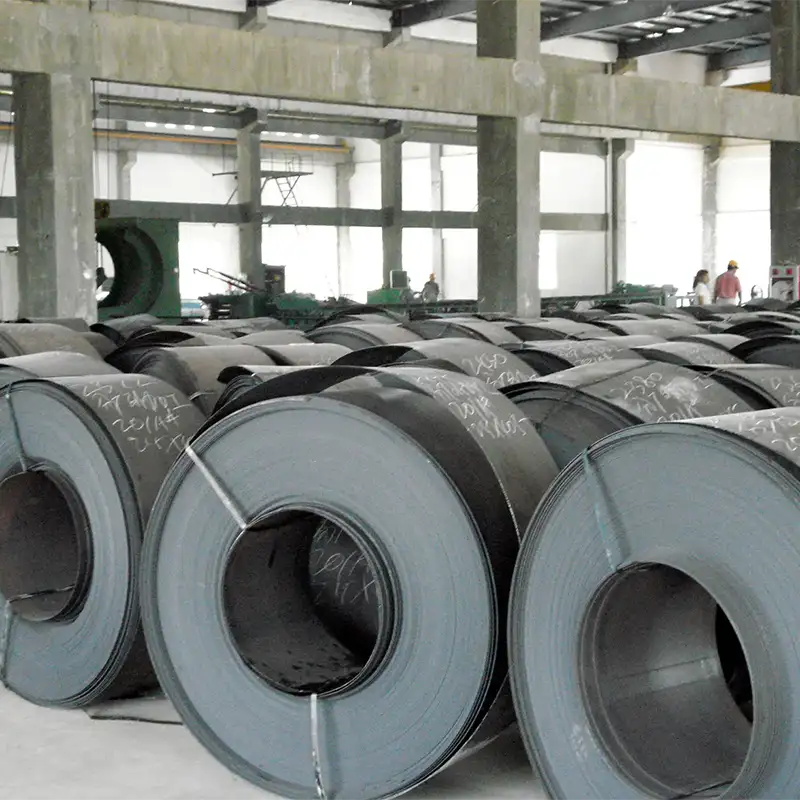
Wear-resistant steel strip is a hot-rolled, heat-treated steel product supplied in coil form (or cut-to-length from coil) that is specifically engineered to resist abrasive and impact wear in heavy-duty environments. Unlike conventional structural steel, wear-resistant steel strip achieves its performance through a carefully controlled combination of alloy chemistry and quenching processes that produce a martensitic or martensitic-bainitic microstructure with a Brinell hardness typically ranging from 360 to 600 HBW.
The term “strip” here refers to the delivery form: the steel is produced on a hot strip mill, coiled, and then either shipped as coil or cut into sheets of custom length. This distinguishes it from heavy plate, which is produced on a plate mill. Strip-based supply offers significant advantages in dimensional flexibility, surface consistency, and downstream processing efficiency.
Common grades include:
| Grade (Nominal Hardness) | Hardness Range (HBW) | Typical Yield Strength (MPa) | Typical Tensile Strength (MPa) |
|---|---|---|---|
| 400 HBW | 360–440 | 850–1,050 | 1,100–1,250 |
| 450 HBW | 420–480 | 1,000–1,200 | 1,250–1,500 |
| 500 HBW | 470–530 | 1,150–1,350 | 1,400–1,700 |
These values reflect typical product data from major wear steel producers.A high-strength hot-rolled abrasive wear-resistant steel strip can achieve a Brinell hardness of 400–465 HBW with tensile strength of 1,180–1,500 MPa at strip thicknesses of 3–20 mm.
The key distinction of wear-resistant steel strip from generic “wear plate” is its production route: hot strip mills enable tighter dimensional tolerances, superior surface finish, and the ability to deliver long coils that can be cut to any length — significantly reducing yield loss during nesting and cutting operations.
2. Why Mining Machinery Needs Wear Resistance
Mining is one of the most aggressive wear environments in heavy industry. Equipment operates under continuous exposure to hard rock, ore, gravel, and mineral slurries — materials with silica content that can exceed 88% SiO₂ by composition, making them extremely abrasive.
The economic case for wear-resistant steel strip in mining is straightforward:
Downtime is the dominant cost. Every hour a crusher, conveyor, or haul truck is out of service for liner replacement represents lost production. Wear-resistant steels extend service intervals by three to six times compared to conventional structural steels in the 355 MPa yield range.
Replacement frequency drives total cost. A chute liner in 400 HBW steel may last 2–3 times longer than mild steel; upgrading to 500 HBW can extend service life by up to 4 times compared to a 400 HBW AR steel in certain sliding-wear applications.
Weight reduction improves payload. Higher hardness allows thinner sections to achieve the same wear life, reducing the dead weight of liners, truck trays, and bucket wear strips. This directly translates to greater payload capacity and lower fuel consumption per tonne moved.
Maintenance labor costs are significant. Fewer liner changes mean fewer man-hours in confined, hazardous environments such as crusher chambers and underground transfer points.
In conveyor systems for mining operations, wear-resistant steels are typically specified with a minimum surface hardness of 400 HB. Recent research recommends increasing the surface hardness to 475–505 HB while maintaining weldability, with the additional material cost recovered through extended failure-free operation time.
3. Abrasion, Impact and Repeated Mechanical Stress
Mining wear is not a single phenomenon. Steel strip in mining equipment must withstand five distinct wear mechanisms, often acting simultaneously:
Abrasive wear (microcutting and microplowing): Hard mineral particles — quartz, sandstone, iron ore — scratch and cut the steel surface. This is the most common wear mode in chute liners, conveyor skirt boards, and material transfer points. Resistance to abrasive wear scales primarily with surface hardness: harder steel = shallower penetration by abrasive particles.-
Impact wear: Large lumps of ore or rock strike the steel surface at high velocity, causing deformation, denting, and eventual material loss. Impact wear dominates in crusher feed chutes, truck tray liners under the drop zone, and excavator bucket wear strips. Impact resistance depends on the balance between hardness and toughness — steel that is too hard and brittle will chip or crack under impact.
Fatigue wear: Repeated loading cycles — each impact or sliding contact causing elastic and plastic deformation — gradually initiate and propagate subsurface cracks. This is particularly relevant in vibrating screens, feeder pans, and areas subject to cyclic loading.
Adhesive wear: Under high contact pressure and relative motion, localized welding and tearing can occur between the steel surface and the counterface. Less common in mining but relevant in certain sliding contacts.
Corrosive wear: In coal mining and underground operations, acidic mine water and humidity accelerate material loss. Combined corrosion-abrasion can significantly reduce service life compared to dry abrasion alone. Chromium and molybdenum additions improve corrosion resistance in these environments.-
The critical engineering insight is that the wear mechanism determines the optimal material selection. A steel optimized for pure sliding abrasion (maximum hardness) may perform poorly in a high-impact application where toughness and work-hardening capacity are more important.
Under cyclic abrasion, wear-resistant steels exhibit surface work hardening — the surface hardness increases from its initial state due to plastic deformation from repeated abrasive contacts. However, the highest surface hardening rate does not always produce the highest wear resistance; when surface loading increases beyond a threshold, a transition to a high wear-rate mechanism occurs.
4. Key Material Properties
When specifying wear-resistant steel strip for mining machinery, the following properties should be evaluated together — not in isolation:
4.1 Surface Hardness (HBW)
Hardness is the primary indicator of resistance to sliding and abrasive wear. Brinell hardness is measured according to EN ISO 6506-1 on a milled surface typically 0.5–3 mm below the surface to eliminate decarburized layers.-
| Hardness Level | Best Suited For |
|---|---|
| 360–400 HBW | Moderate abrasion, mixed abrasion-impact, applications requiring cold forming |
| 420–480 HBW | Heavy sliding abrasion, chute liners, conveyor components |
| 470–530 HBW | Severe abrasion with moderate impact, crusher liners, screen decks |
| 550–600 HBW | Extreme abrasion, low-impact, where maximum wear life is critical |
The relationship between hardness and wear resistance is approximately linear for pure abrasive wear: doubling hardness roughly doubles wear life, assuming other factors remain constant.
4.2 Impact Toughness
Impact toughness — typically measured as Charpy V-notch energy at low temperature — determines the steel’s ability to absorb impact without fracturing. Premium wear-resistant steel strips guarantee impact toughness of ≥34 J/cm² at −40°C in the longitudinal direction and ≥50 J/cm² at −20°C in the transverse direction, ensuring reliable performance even in cold-climate mining operations.
4.3 Yield Strength and Tensile Strength
For structural design, yield strength determines the maximum allowable stress before permanent deformation. Typical values for 400 HBW strip steel: yield strength 850–1,050 MPa, tensile strength 1,100–1,250 MPa. At 500 HBW, yield strength can reach 1,150–1,350 MPa with tensile strength of 1,400–1,700 MPa.
4.4 Weldability
Mining equipment liners and wear strips are almost always welded or bolted into position. Low carbon equivalent (CET < 0.33, CEV < 0.42) allows all conventional welding methods to be used without preheating for material above +5°C.
4.5 Work-Hardening Capacity
Some mining wear applications — particularly those involving high-stress grinding and gouging — benefit from steels that work-harden under load. Austenitic manganese steels represent the extreme end of this spectrum, but martensitic wear steels also exhibit measurable surface hardening under cyclic loading, which can improve wear resistance in service.
5. Typical Mining Equipment Applications
Wear-resistant steel strip is used across the mining value chain:
Crushing and Screening
- Jaw crusher cheek plates — protect the crusher frame from wear by the material being crushed
- Cone crusher liners — feed cone and distribution plates
- Impact crusher blow bars and liners — where high hardness combined with toughness resists both abrasion and impact
- Vibrating screen decks and side plates — fatigue-resistant steel strip for high-cycle loading
Material Handling
- Transfer chute liners — the single most common application. Hardox 600 and equivalent grades provide long service life when moving iron ore and other highly abrasive materials-
- Conveyor skirt boards and wear strips — line the sides of transfer points where material slides at high velocity
- Feeder pan liners and hopper liners
- Silo and bin liners — especially in coal handling where corrosion-abrasion is a factor
Loading and Hauling
- Excavator bucket wear strips and cutting edges — the wear strip protects the bucket lip, and can be “stitch” welded to the bucket edge-
- Dump truck tray liners — large-area wear protection where weight reduction directly increases payload
- Loader bucket liners and side bars
- Dragline and shovel wear components
Processing
- Ball mill liners — high-impact grinding environment
- SAG mill feed chutes and trommel screens
- Cyclone and classifier wear parts
6. Thickness / Width / Hardness / Strength Customization
Wear-resistant steel strip offers significant dimensional flexibility compared to plate products:
Thickness
| Product | Typical Range | Notes |
|---|---|---|
| Hot-rolled strip (as-rolled, 400–450 HBW) | 3–12 mm | Most common for liners and wear strips |
| Heavy strip / cut from coil (400–500 HBW) | 3–20 mm | Wider range available on request |
| Cut-to-length from coil | 2–25 mm | Custom lengths from coil |
A high-strength hot-rolled abrasive wear-resistant steel strip in the 400–465 HBW range is available in thicknesses of 3–20 mm. For standard 400 HBW strip, typical production thickness is 5.00–12.00 mm with widths of 1,000–1,500 mm; thicker and wider dimensions are available on request.
Width
Standard strip widths range from 1,000 mm to 1,500 mm. Wider coil up to 2,000 mm can be supplied on request for certain grades. ArcelorMittal’s Relia range offers cut-to-length sheets from coil up to 1,860 mm wide in 400–450 HBW grades.
Cut-to-Length Flexibility
One of the main advantages of strip-based supply is the ability to cut any length from the coil at the service center or at the customer’s facility. This eliminates the fixed-length constraint of plate products and allows optimal nesting for laser cutting and plasma cutting operations, significantly reducing scrap rates.
Hardness Customization
Wear-resistant steel strip is available in discrete hardness levels (typically 400, 450, and 500 HBW nominal) with narrow hardness tolerances of ±30 HBW. This tight tolerance ensures predictable, consistent wear life from coil to coil and batch to batch.
7. How to Select the Right Steel Strip
Selecting the right wear-resistant steel strip for a mining application requires balancing four factors:
Step 1: Identify the Dominant Wear Mechanism
| If the dominant wear is… | Prioritize… | Recommended hardness |
|---|---|---|
| Sliding abrasion (chutes, skirts) | Maximum hardness | 450–500 HBW |
| Impact-abrasion (crusher feed, truck drop zones) | Hardness + toughness balance | 400–450 HBW |
| High-stress grinding (mill liners, crusher chambers) | Work-hardening capacity + hardness | 450–500 HBW |
| Corrosion-abrasion (coal, underground) | Alloy content (Cr, Mo) + hardness | 400–450 HBW with enhanced alloying |
| Fatigue cycling (screens, feeders) | Toughness + consistent hardness | 400 HBW |
Step 2: Evaluate the Hardness vs. Toughness Trade-off
Higher hardness always improves abrasive wear resistance. However, above approximately 500 HBW, the toughness of conventional martensitic steels begins to decline, increasing the risk of chipping and cracking under impact. The practical selection logic:
- 400 HBW: The industry workhorse. Excellent balance of wear resistance, toughness, weldability, and formability. Suitable for the majority of mining applications.
- 450 HBW: For applications with heavy sliding abrasion where impact loads are moderate. Provides 20–40% longer wear life than 400 HBW in sliding wear.
- 500 HBW+: For severe abrasion with low impact. Not recommended for high-impact zones unless a toughness-enhanced grade is specified.
For conveyors in mining workings, the industry-standard minimum requirement is 400 HB surface hardness. Where abrasive conditions are severe, 475–505 HB is recommended, provided weldability is maintained.
Step 3: Verify Weldability and Fabrication Requirements
If the wear strip will be field-welded (common for liner replacement), verify:
- Carbon equivalent (CET < 0.33 preferred for no-preheat welding)
- Minimum bending radius if cold forming is required (typically 3× sheet thickness for 400 HBW)
- Cutting method (plasma, laser, or waterjet — all suitable; flame cutting requires preheat below +5°C)
Step 4: Consider the Total Cost of Ownership
The purchase price per tonne is only one component. Calculate:
- Wear life (tonnes of material processed per mm of liner thickness loss)
- Downtime cost per liner replacement (labor + lost production)
- Weight impact on payload or fuel consumption
In many cases, a higher-hardness strip with a 30–50% higher purchase price can deliver 2–4× the service life, resulting in a substantially lower cost per tonne of material handled.
Conclusion
Wear-resistant steel strip is the foundational material for mining machinery wear protection. Its combination of high Brinell hardness (360–600 HBW), controlled impact toughness, and dimensional flexibility in coil and cut-to-length form makes it the optimal choice for chute liners, bucket wear strips, truck tray liners, crusher components, and conveyor wear protection.
The key to successful selection lies in matching material properties to the dominant wear mechanism — understanding whether the application demands maximum abrasive resistance, impact toughness, or a balance of both. With hardness grades from 400 to 600 HBW and thicknesses from 3 mm to 20+ mm, wear-resistant steel strip can be tailored precisely to your mining application.