What Is This Product?
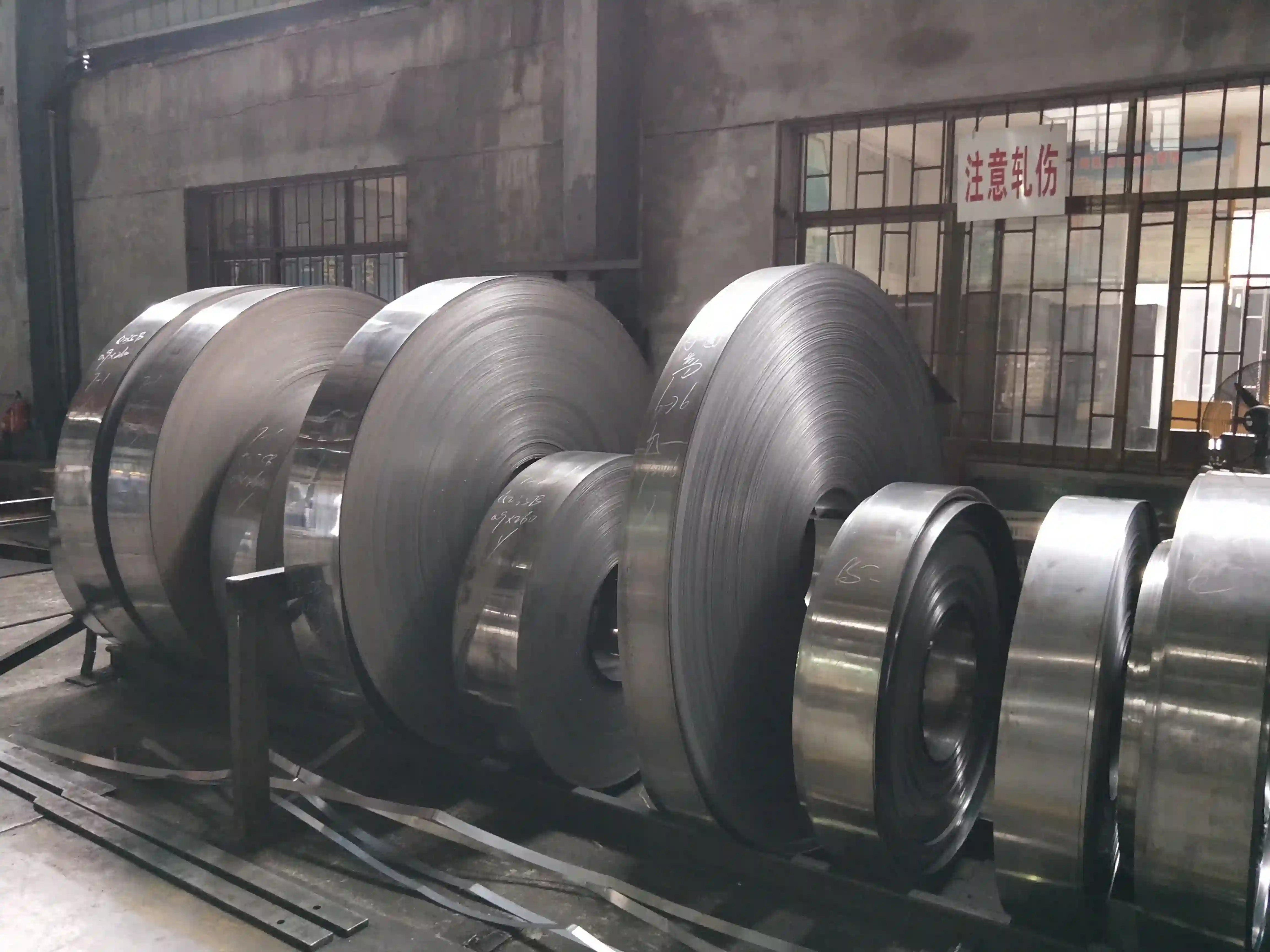
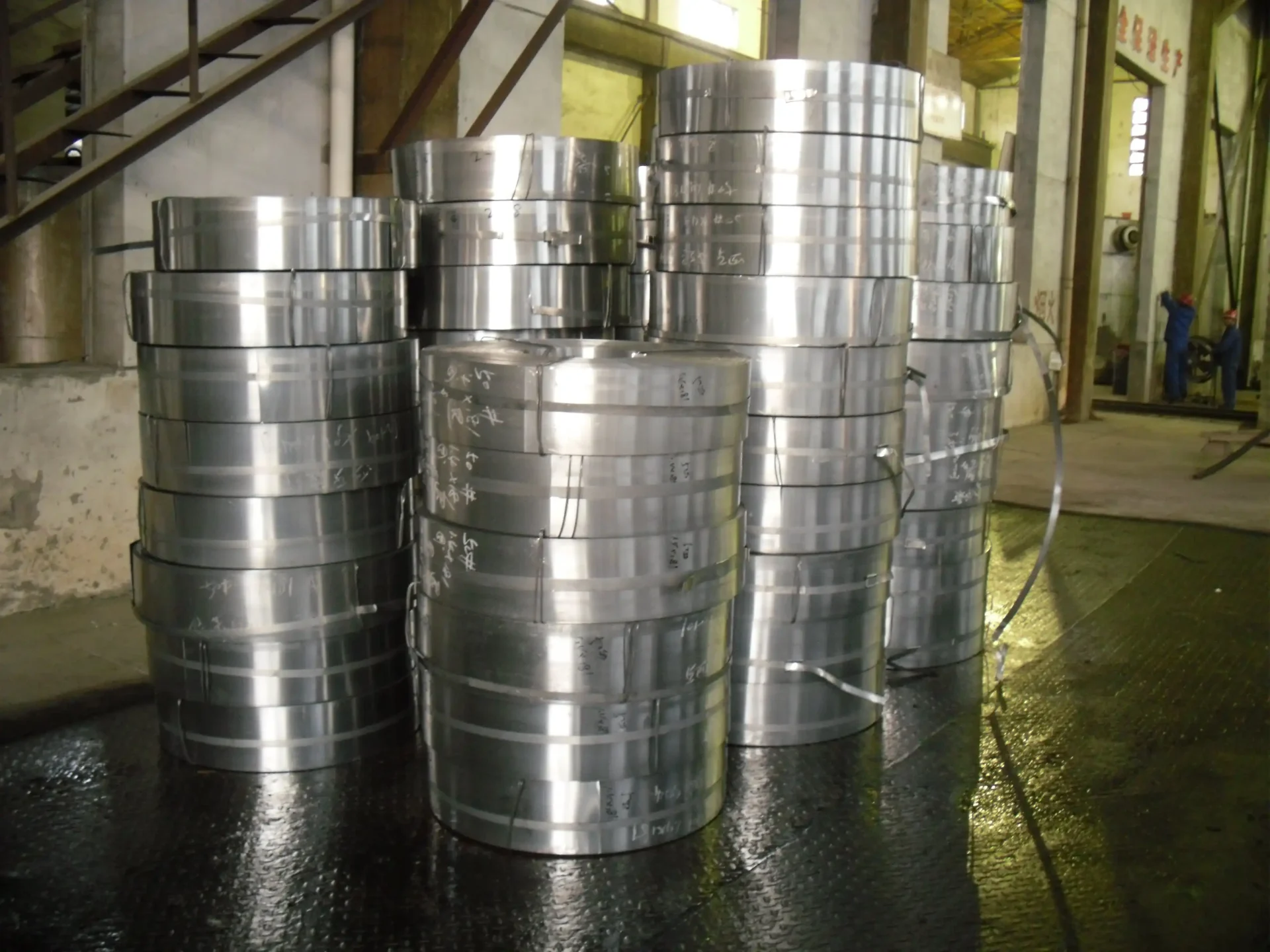
This is a custom steel strip product designed for mining cutting and wear-resistant applications. It has two core functions:
Mining Saw Blade Steel Strip
Used to manufacture mining saw blades, diamond saw blade cores, band saw blades, and other cutting tools. After quenching and tempering, the matrix hardness can reach 48 HRC or above, with strength of 1500 MPa or higher. A 3–7 mm thick steel plate can be used for saw blade matrices with a diameter greater than 1800 mm.
Wear Component Steel Strip
Used to manufacture wear liners, scraper blades, cutting edges, wear bars, and other replacement parts for mining machinery. Typical wear-resistant steel strip can reach 400 HBW or above, with tensile strength of at least 1316 MPa.
Unlike standard off-the-shelf products, this product is positioned as an OEM custom solution. The customer provides operating parameters, and Honghai outputs an engineered combination of material, issiqlik bilan ishlov berish, and dimensions.
Who Is This For?
| Customer Type | Typical Need | Honghai Capability |
|---|---|---|
| Mining saw blade manufacturers | Quenched and tempered steel strip for saw blade matrices, requiring high fatigue life | 75Cr1, C75S, and other grades; precision strip at 44–47 HRC |
| Mining equipment OEMs | Custom wear components that precisely match machine models | Drawing-based processing; full customization of thickness, width, and hardness |
| Stone processing companies | Large-diameter saw blade matrices requiring high strength and toughness | 3–7 mm hot-rolled or cold-rolled matrix strip for blades over 1800 mm |
| Mining end users | Wear part replacement with longer service life | Material and heat treatment recommendations based on wear mechanism |
| Traders and distributors | Multi-specification, small-batch procurement | Flexible MOQ; ISO 9001:2015 quality system |
Customization Process: From Parameters to Finished Parts
The core logic of Honghai’s custom service is simple: you provide operating parameters, we deliver a complete solution.
7 Key Parameters to Submit
-
Drawing – Part shape, critical dimensions, tolerance requirements
-
Existing Material – Current steel grade or performance feedback
-
Thickness – Finished thickness and tolerance requirements
-
Width – Finished width and slitting precision requirements
-
Hardness – Target hardness range in HRC or HV
-
Application – Cutting target (ore, stone, concrete) and wear type (abrasive, impact, adhesive)
-
Machine Model / Cutting Requirement – Equipment model, speed, feed parameters, expected service life
Honghai Five-Step Solution
Step 1 — Material Selection
Match the most economical steel grade to the operating conditions, avoiding over-engineering or under-specification.
Step 2 — Heat Treatment
Determine quenching temperature, tempering temperature, and holding time. For 75Cr1, a recommended process is 840°C oil quenching + 440°C tempering. Hardness after quenching can reach 58–64 HRC, and after tempering it stabilizes at 52–56 HRC. Honghai has independently developed alloy steel strip heat treatment equipment and methods, allowing precise control of the hardness-toughness balance.
Step 3 — Dimension Control
Thickness tolerance can be controlled to ±0.02 mm, width tolerance to ±0.10 mm, and flatness to a maximum of 1 mm over 3 meters, ensuring accuracy for subsequent stamping or laser cutting.
Step 4 — Surface Treatment
Available surface conditions include bright, blue temper, and anti-rust oil coating to meet different assembly and appearance requirements.
Step 5 — Cutting Solution
Based on saw blade diameter, tooth profile design, and cutting target, Honghai recommends the optimal matrix thickness and hardness combination.
Material Selection Reference
| Grade | Typical Hardness Range | Key Features | Best-Fit Applications |
|---|---|---|---|
| 75Cr1 | Quenched 58–64 HRC / Tempered 52–56 HRC / Hard delivery 45–50 HRC | High hardness, high strength (Rm ≥ 1300 MPa), mukammal aşınma qarshilik | Mining saw blade matrices, punches, dies |
| C75S | 29–55 HRC depending on thickness and process | High-carbon spring steel, good fatigue resistance | Band saw blades, spring strips, cutting tools |
| 65Mn | 42–50 HRC after quenching | Cost-effective, balanced mechanical properties | Wear liners, scraper blades, general cutting parts |
| 75Ni8 | 44–47 HRC in quenched and tempered condition | High hardenability, uniform cross-section hardness | Precision saw blades, band saws |
| 50CrV4 | 48–54 HRC after quenching | Balanced wear resistance and toughness | Heavy-duty wear components |
Note: The data above is for reference only. Actual material recommendations require engineering evaluation based on customer operating parameters. Honghai can develop non-standard materials based on customer drawings and working conditions.
Key Technical Specifications
| Parameter | Range |
|---|---|
| Thickness | 0.10–3.50 mm (cold-rolled precision strip); 3–7 mm (hot-rolled saw blade matrix) |
| Width | 2–550 mm (precision slitting) |
| Hardness | 29–55 HRC / 400+ HBW for wear parts |
| Thickness Tolerance | ±0.02 mm (finished condition) |
| Width Tolerance | ±0.10 mm |
| Flatness | ≤1 mm / 3 m |
| Surface Condition | Bright / blue temper / oiled |
| Delivery Condition | Quenched and tempered / annealed / hard |
| Certification | ISO 9001:2015 |
Why Choose Honghai?
20+ Years of Industry Experience
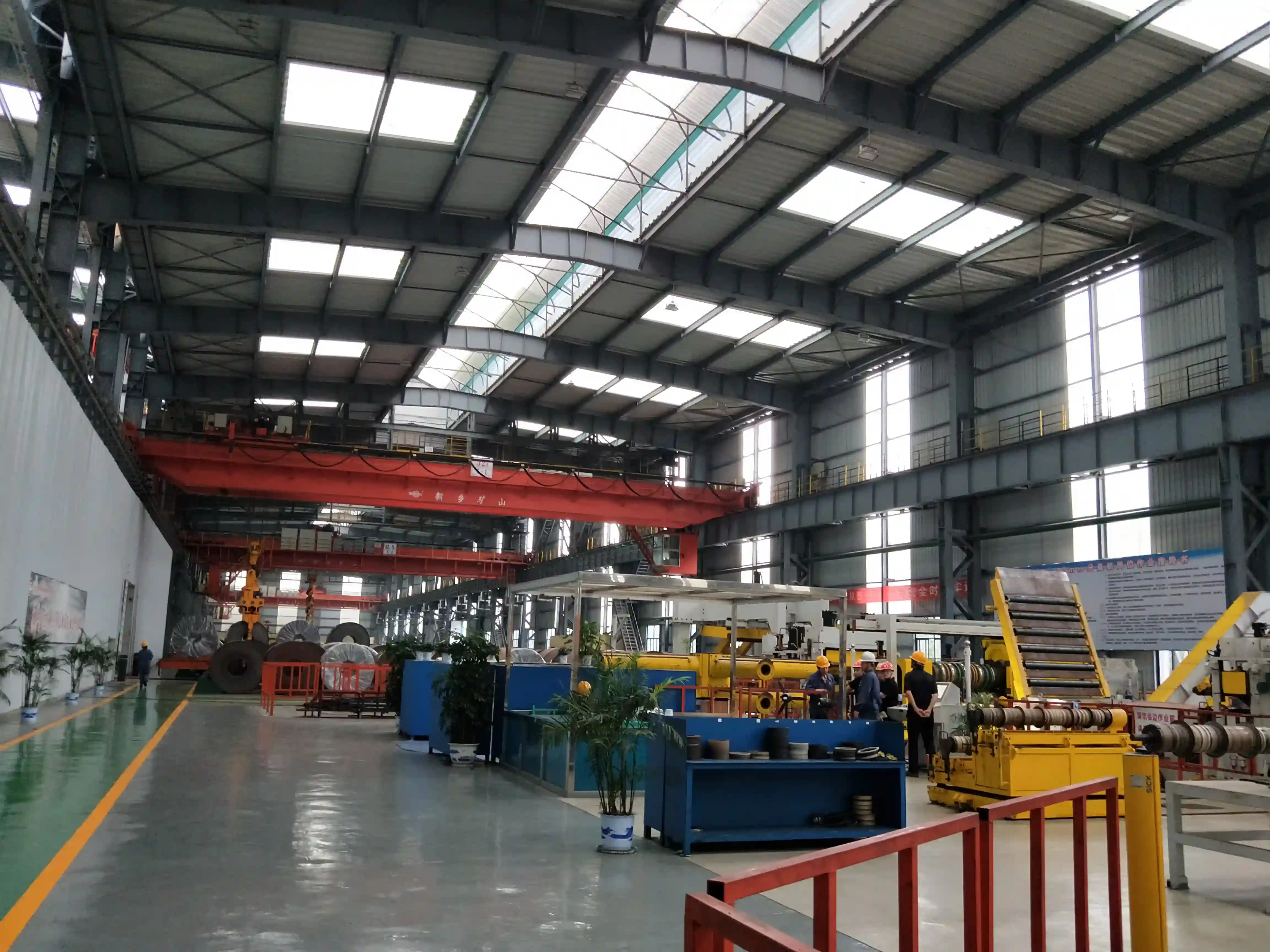
Guangzhou Honghai Metal Materials Co., Ltd. was founded in 2004 and specializes in the production of cold-rolled heat-treated steel strip. It is a leading supplier of high-carbon steel strip, quenched and tempered steel strip, and cold-rolled annealed steel strip.
In-House Heat Treatment Technology
Honghai owns patented alloy steel strip heat treatment equipment and methods (CN121780850A), enabling precise control of the hardness-toughness balance.
One-Stop Customization
From material recommendation and heat treatment to dimension finishing and surface treatment, all five stages are completed within the same supply chain, reducing multi-supplier coordination costs.
Mining Application Experience
Products are widely used in tools and hardware, mining machinery, automotive parts, and other fields. Honghai has a deep understanding of material failure mechanisms under heavy-load mining wear conditions.
FAQ
Q1: What is the minimum order quantity for custom steel strip?
A: MOQ varies by material and specification. Honghai supports flexible MOQ. Small-batch trial orders for standard materials can be negotiated. For custom materials, an annual volume estimate is recommended to optimize production scheduling.
Q2: What lead time can I expect from drawing submission to sample delivery?
A: Standard specification samples take approximately 7–15 working days. New material development or special heat treatment processes take approximately 20–30 working days. The exact lead time will be confirmed in the formal quotation after engineering evaluation.
Q3: Can you recommend material based on my existing saw blade sample?
A: Yes. Customers can provide material analysis reports or performance feedback such as wear rate and fracture conditions. Honghai engineers will reverse-recommend optimized material and heat treatment solutions.
Q4: What hardness is recommended for a mining saw blade matrix?
A: It depends on blade diameter and cutting target. Generally, for large-diameter blades over 1800 mm, the matrix hardness after heat treatment is recommended at 40–48 HRC to balance rigidity and fatigue resistance. Cutting hard rock favors higher hardness for wear resistance. Cutting quartz-bearing ore requires balanced toughness to prevent tooth breakage.
Q5: What is the difference between wear-resistant steel strip and ordinary carbon steel strip?
A: Wear-resistant steel strip achieves 400 HBW or above through alloying with Cr, Mn, and other elements plus quench-tempering treatment. Its wear life is typically 3–5 times that of ordinary Q235 carbon steel. Typical wear-resistant steel strip has tensile strength of at least 1316 MPa.
Q6: What surface treatments are available?
A: Bright finish, blue temper, anti-rust oil coating, phosphating, and others. The choice depends on downstream processes such as stamping, laser cutting, and welding, as well as storage conditions.
Q7: How do I get a quotation?
A: Submit the following through the inquiry form at the bottom of the page: drawing or specification description + material requirements + thickness/width + hardness range + application conditions + annual volume estimate. Honghai engineers will reply with a technical assessment within 1 business day and provide a formal quotation within 2 business days.